
Ontario’s 2025 Capacity Auction produced one of the strongest market signals in the province’s history, clearing at $170,000 per MW-year. This represents a near 188% jump from the previous year and confirms what the system has been hinting at for several cycles: Ontario’s grid is tightening, and the value of fast, flexible, dispatchable capacity is rising sharply.
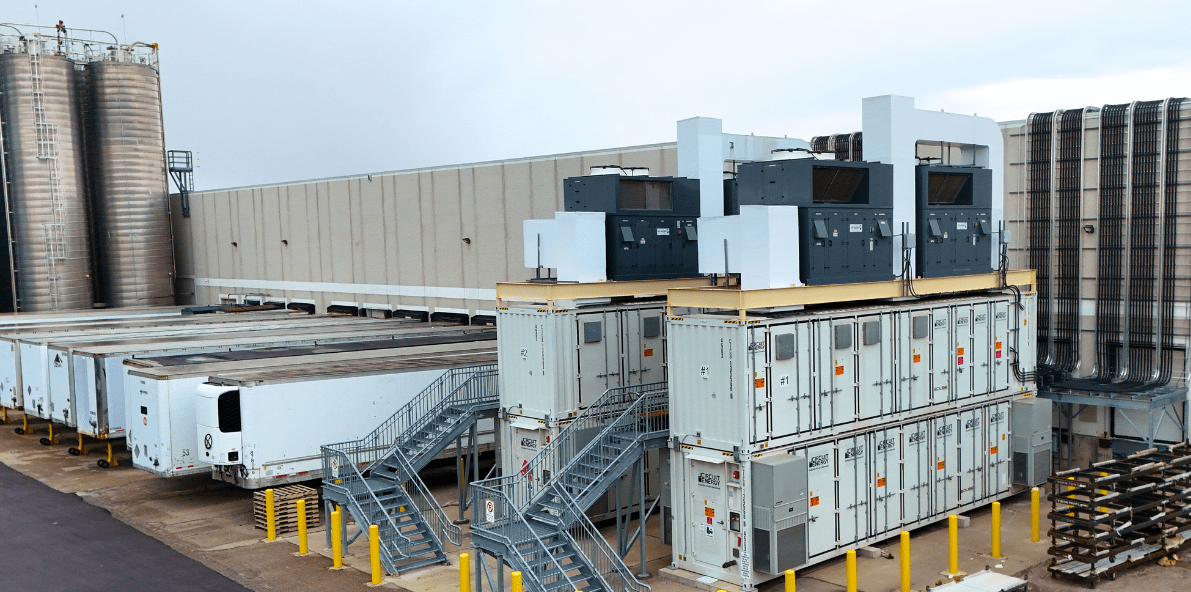
For Class A industrial facilities, this shift transforms the economics of Battery Energy Storage Systems (BESS). Storage is not only a GA management tool, but also an increasingly valuable revenue-generating, reliability-enhancing asset with multi-stream financial upside.
1. Why Capacity Prices Jumped to $170,000/MW-Year
The IESO 2025 auction result is the outcome of several long-building system conditions:
Structural supply constraints: New capacity additions have been slower than expected due to procurement timelines, construction delays, and the long lead times associated with new generation.
Rising system demand: Industrial activity, heating electrification, and EV adoption continue to intensify summer and winter peaks.
Tighter import dynamics: Ontario relies heavily on out-of-province support; when these resources decline or shift their participation, system margins tighten quickly.
Higher reliability requirements: To maintain adequacy standards, the province is securing more capacity raising the marginal price for dependable resources.
These conditions have been emerging over several years, and the 2025 auction is the inflection point where market fundamentals finally translated into pricing.
2. What the 2025 Auction Says About Ontario’s Future
The clearing price is more than a single-year outcome it signals a multi-year trend of tightening adequacy:
-
- Fast-response and dispatchable resources are now in demand.
-
- The system is leaning heavily on flexible capacity, especially storage.
-
- Industrial loads participating with dispatchable assets are becoming increasingly important.
-
- Ontario’s capacity needs are expected to continue rising in future auctions, especially as major nuclear units retire and electrification accelerates.
The 2025 result confirms that Ontario is structurally short on flexible capacity, and the market is pricing that scarcity accordingly.
3. Why This Matters for Class A Industrial Facilities
For large industrials, energy strategy has traditionally centered on Global Adjustment (GA) management. While GA savings remain essential, the 2025 auction introduces a second major economic pillar:
Capacity revenue.
At $170,000/MW-year, even modest storage deployments now generate substantial recurring value. The implications are significant:
-
- Flexibility now has direct monetary value.
-
- Reliability-oriented assets deliver stronger returns.
-
- Automated peak management becomes more attractive than curtailment-based strategies.
-
- On-site energy assets now have diversified, stacked revenue streams.
This shift elevates BESS from an energy efficiency investment to a high-impact operational asset.
4. How Battery Storage Captures This Value
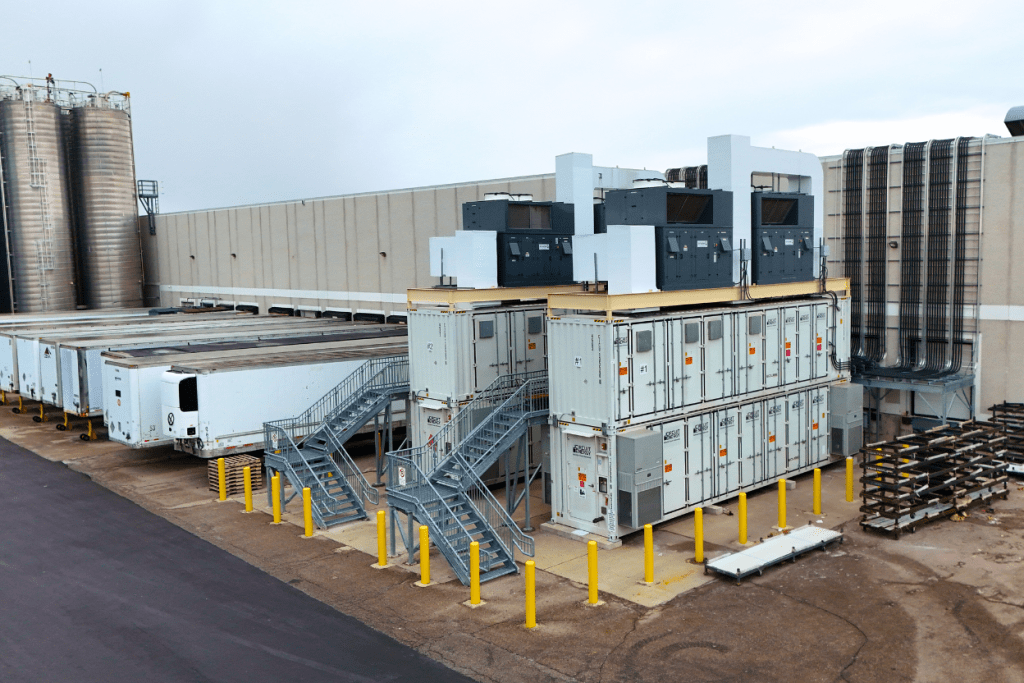
A well-engineered BESS perfectly aligns with IESO’s requirements for capacity and peak reduction.
A. Capacity Market Revenue
BESS performance characteristics make it ideal for capacity commitments:
-
- Rapid and accurate response
-
- Predictable delivery with high round-trip efficiency
-
- Multi-hour duration options
-
- High availability for dispatch
This creates year-over-year revenue certainty.
B. Global Adjustment Peak Management
Storage remains one of the most reliable GA strategies:
-
- Reduces peak load without affecting production
-
- Avoids forecasting uncertainty through flexible discharge windows
-
- Protects operations from peak-related exposure
GA savings alone often justify a major portion of system cost.
C. Demand Response Participation
Storage unlocks demand response without operational disruption:
-
- Dispatchable availability independent of production cycles
-
- Ability to stack DR payments with capacity revenue
-
- Improved performance certainty during dispatch hours
This adds another stable revenue layer.
5. Federal Incentives Strengthen Economics Even Further
Current federal support significantly improves project returns:
-
- 30% Clean Technology ITC for eligible storage assets
-
- Accelerated Capital Cost Allowance, enhancing after-tax cash flow
Combined, the above incentives significantly reduce initial CAPEX, thus increasing IRR and shortening payback periods.
6. Full Value Stack for Industrial BESS in 2025
A battery system commissioned today captures:
-
- High-capacity revenue at the strongest clearing prices Ontario has seen
-
- Substantial GA savings
-
- Demand response payments
- Demand response payments
-
- Federal incentive support
- Federal incentive support
-
- Improved power quality and operational resilience
- Improved power quality and operational resilience
-
- Protection against volatility in grid reliability and market pricing
- Protection against volatility in grid reliability and market pricing
Few industrial investments combine this level of financial return with operational benefit.

7. Why Timing Matters Now
The 2025 auction creates a time-sensitive opportunity:
-
- Assets must be operational to participate in the next auction cycle.
-
- Elevated prices may normalize once more capacity is built early movers lock in the highest value.
-
- Federal incentives are available now but may not remain as generous long-term.
-
- Each year of delay means a year of lost revenue and avoidable GA charges.
Conclusion
Ontario’s 2025 Capacity Auction marks a defining moment. With clearing prices at $170,000 per MW-year and system conditions tightening, battery storage is no longer a strategic option it is a financially compelling and operationally necessary asset.
For Class A industrial facilities, a well-designed BESS offers:
-
- Reliable capacity revenue
-
- Measurable GA reduction
-
- DR participation without disturbance
-
- Enhanced resilience and power quality
-
- Strong financial returns supported by federal incentives
In the current market environment, energy storage stands out as one of the highest-value investments an industrial facility can make.