
Winter and Solar, A Common Concern
Every winter, Ontario’s rooftops turn white and energy costs rise. For manufacturers considering solar, one question always surfaces:
“Do solar panels really work in Canadian winters?”
It’s a fair question after all, shorter days and snow-covered roofs seem like a recipe for downtime. But the reality is far more encouraging. Solar technology is built to thrive in cold climates, and when designed correctly, it can deliver dependable performance year-round even in subzero conditions.
Let’s unpack the science, the data, and the design strategies that make solar a smart investment no matter the season.
1. Cold Weather Can Actually Improve Solar Efficiency
It may sound counterintuitive, but solar panels actually perform better in cold temperatures.
Solar modules convert sunlight not heat into electricity. When panels get too hot, their efficiency drops slightly. In colder weather, electrons move more freely within the cells, meaning panels often operate more efficiently in winter sunlight than on hot summer days.
So while daylight hours are shorter, the energy yield per hour of sunlight can be higher during Ontario’s crisp winter months.
2. Snow Isn’t the Enemy Many Think It Is
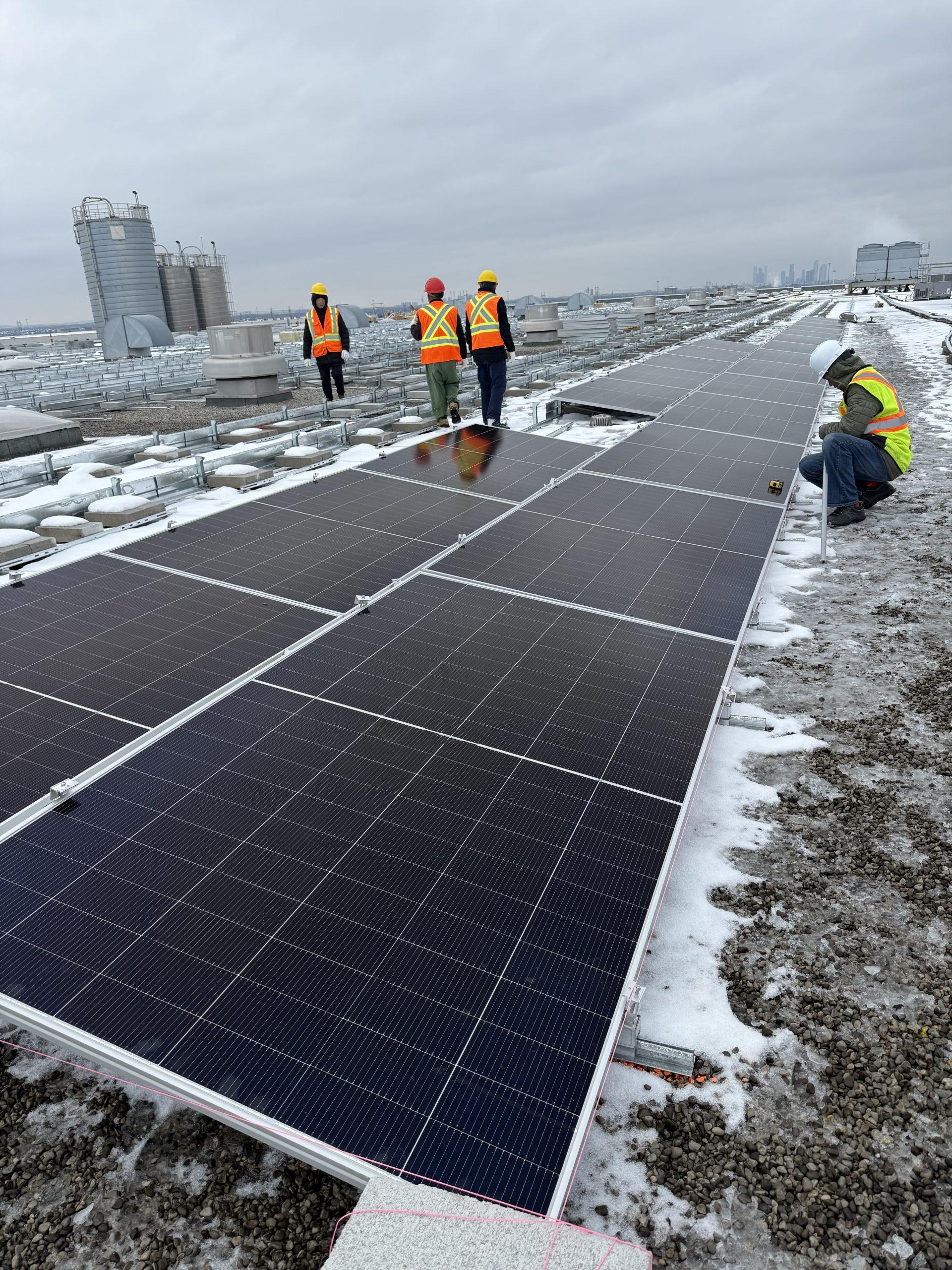
Snowfall is often the first concern, but in practice, it’s rarely a major performance issue.
- Tilted panel angles help snow slide off naturally.
- Dark panel surfaces absorb heat, causing snow to melt faster.
- And with modern racking designs, any temporary accumulation usually clears after a few hours of sunlight or wind.
According to data from the National Renewable Energy Laboratory (NREL), snow-related losses typically account for less than 5% of annual production in well-designed systems.
For industrial roofs, the impact is even smaller, as system designers account for snow load and local weather patterns in every engineering plan.
3. Winter Sunlight Still Delivers Power
While days are shorter, Ontario still receives 3–4 hours of peak sunlight per day in the winter months. With today’s high-efficiency modules, that’s enough to sustain meaningful energy production especially for facilities operating seven days a week.
Many manufacturers also benefit from net metering, which allows surplus summer production to offset winter consumption. The result: your solar array works across the seasons to balance your annual energy costs.
4. Winter Maintenance: Low Effort, High Reward
Solar is remarkably low-maintenance, even in winter. Still, a few proactive steps can keep performance optimal:
- Routine monitoring: Most modern systems have real-time monitoring dashboards to alert you of any dips in performance.
- Professional inspections: Annual maintenance visits check for snow damage, wiring issues, or shading from ice buildup.
- Optional cleaning: For heavy snowfall or critical systems, a quick clearing by trained personnel can restore production immediately.
Circuit Energy’s operations team, for example, monitors every installation to ensure maximum uptime even during the toughest months.
5. The Bigger Picture: Solar as a Hedge Against Winter Energy Costs
Beyond performance, the real value of solar in winter lies in energy cost stability.
Ontario manufacturers face some of the highest winter electricity rates in the country due to heating loads, demand peaks, and Global Adjustment charges. A properly sized solar system reduces exposure to these fluctuations especially when paired with battery storage or power conditioning systems.
In other words, while the weather may be unpredictable, your energy costs don’t have to be.
6. Built for Canada, Backed by Engineering
Every Circuit Energy solar project is engineered for Ontario’s climate realities:
- Structural designs that handle snow and wind loads.
- Racking angles optimized for winter sunlight.
- Modules tested for temperature extremes.
- Monitoring systems that flag performance variances early.
That’s why hundreds of facilities across the province have adopted solar not just as a sustainability goal, but as a long-term operational advantage.
Winter-Proof, Industry-Ready Solar
Canadian winters may challenge many technologies but not solar, when it’s designed right. Cold air boosts efficiency, snow impact is minimal, and with proper planning, your solar investment continues to perform all year long.
So if you’ve been waiting for the “right season” to go solar, remember:
Winter is when you see the true strength of your system and the expertise of your installer.
Curious how solar would perform at your facility this winter?
Book a no-cost 15-minute planning call with Circuit Energy’s engineering team and learn how your roof could be generating returns even in the snow.